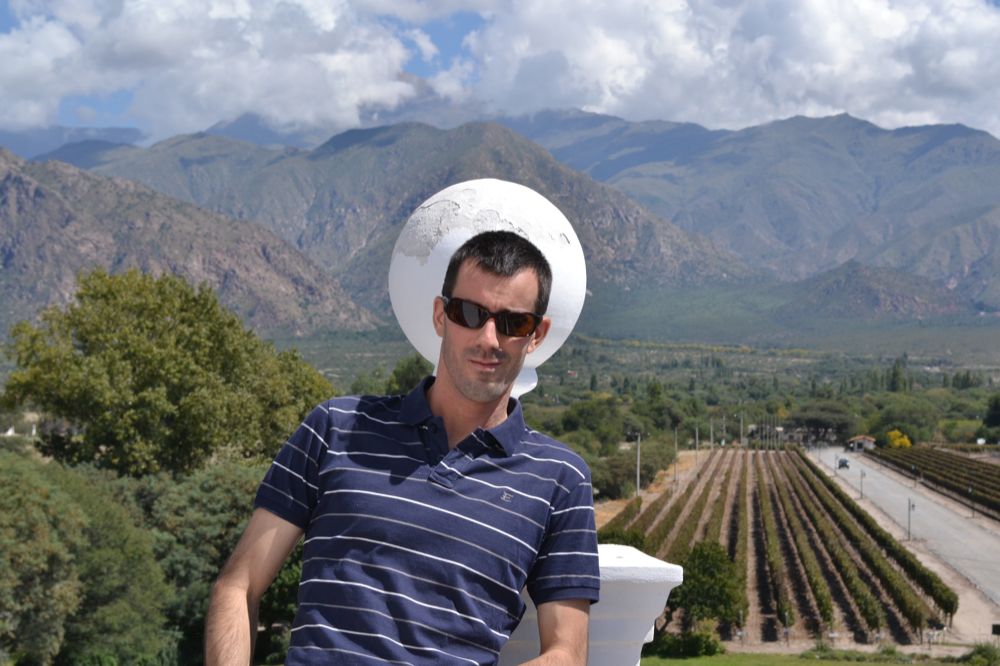
First it was a premonition. Then a breeze of craziness. A 2%-possibility that turned into 100%-reality. It feels like destiny, magic, like love.

This blog is to freeze this special period. To give room to our new-won Latino-coloured creativity. And - above all - to let you be part of it.

Eager to read your juicy comments! / Faites nous part de vos remarques ou blagues, lachez-vous! / Vse neumnosti dobrodošle!

P & T


Wednesday, May 2, 2012

From prisons to fashion shows


Lima, one week, lots of work, few photos.

I did exactly what they tell you not to do: stay in Lima for a week. »What?#?*&%? in Peru and you don't go to Machu Picchu?« kept saying the astonished faces. Turists' wisdom has it that Lima is ugly, grey and foggy – you land, get over your jetlag and hop in some of Latin America's best restaurants... and quickly move on.

Glued to Lima by work, I stayed. And absolutely loved it. I tried for a week to understand where Lima's proverbial ugliness came from – in vain. Instead, I stumbled across some of most breath-taking churches I've seen so far. Lovely »plazas« that litteraly call you to sit down and enjoy. Colourful colonial houses that feel like a relief compared to other skyscraper-loaded centers (bingo, the cutest one hosts the very Ministry of Foreign Affairs!). Bars that smell of past. Monasteries that feel as if in Spain. Sun 24/24, seaside walks, parks and the sea full of surfers.

Lima is all about the five senses. The smell of sea, humidity and fish that fills your nose as soon as the plane touches down. The taste of ceviche, tropical fruits and yellow potatoes. The sound of histerical horns (driving takes lots of courage) and nostalgic peña songs. The sight of gold, lots of gold – gold that even has its own museum. The touch of alpaca wool that abounds everywhere – on bodies, market shelves and catwalks. And obvisouly, the sensation of your head spinning after a glass (only one) of pisco. »Eso es un error,« was Luc's opening sentence at my very first Lima dinner while ordering piscos. A mistake that you repeat over and over again. It's addictive.

The sixth sense in Lima, however, tells you that it's a country full of contradictions. Which city isn't, anyway? It boosts Latin America's best macroeconomic numbers, yet 30% still live in poverty. It keeps restaurating amazing gold-loaded churches and temples, neighboured by modern villas (favelas). It's hungry of progress yet not ready to invest in technology (why? if manual workers cost only 1 USD). It wants to get rid of thousands of foreign drug-dealers/prisoners but lets kilos and kilos of drugs leak behind the walls. It's the world's biggest exporter of cocaine - and seems to like it. On the way to the prison, by the way, you pass one that hosts the brother of the current (very popular) president.

The time and the battery ran short to take a lot of pictures but there are some:


 Spread out, covered in its typical pre-winter fog... a view from the Malecon promenade.


Baranco, Lima's Montmartre, central park and library.


Mind the shiny front and the less shiny behind.


Puente de los suspiros (sighs / soupires / vzdihljajev), flooded with turists, just as in Venice.


Pachacamac ruins, next to modern favelas.


The ex-avenida panamericana, to the north.


The new shiny Slovenian room, just before its birth.

Tuesday, April 17, 2012

To the clouds and back

Day 8: Tren a las nubes

In colonial times, this was the way to travel from northwestern Argentina to Lima in Peru. 20 days, 800 km, packed trains.

Today Argentinian railways are almost extinct. To Lima you travel by bus or by plane. But for touristic purposes, the "Train to the clouds" remains Argentina's most famous train ride. It's a very long day, 7am-11 pm, rising from 1180m (Salta) to 4220m up in the mountains (beware altitude dizziness).


Train worming its way through the rugged landscape ...


Disturbing a lama party.


After the deterioration of the region's mining and its railway, the tiny vilages now depend totally on the Tren a las nubes for income.


La Polvorilla, a breath-taking engineering achievement at 4220 m. A 64 high and 224m long viaduct spanning a vast desert canyon. Its construction was a challenge more than a necessity. It feels like Disneyland in real nature.


A happy tourist (not even missing his SNCF).


A stop in San Antonio de los Cobres, Argentina's highest village (3775m). 

Monday, April 16, 2012

How many colours can a rock be made of?

Day 6 & 7: Maimara - Tilcara - Humahuaca - Salinas Grandes - Purmamarca

Tired of the hustle and bustle of the Salta city, we escaped to the wild again. This time to the Jujuy province - the one that links Argentina to Bolivia, where villages get scarcer and the mountains more colourful. Maimara, where we stayed for two nights in the cosy nest of Juan's family, is surrounded by the so called "Painter's Palette" (photo below) and Purmamarca by the "Hill of Seven Colours". The North of Argentina is to be discovered off the beaten track, possibly during low season and in good weather that brings out its most vivid colours.


The expat wisdom has it that in Argentina, 2 people out of 3 are bastards but that the remaining 30% are so cool that they completely neutralize the bad impression. So right! A good rest and la dolce vita in Juan's garden who opened up his doors as if we were his kids.


A trip to the "devil's throat". Remark: every second rock formation in Argentina bears this name.


Tilcara, peacefully nestled among ocre hills.


Avenida Corrientes in Humahuaca. In love with Cristina, obviously.


An evening stroll in Tilcara.


Sky, snow, salt.


"Hill of Seven Colours". I bet there are more!

Sunday, April 15, 2012

Cowboy fever

Day 4 & 5: Molinos - Cachi - Salta

Horse-riding at 7 am. The Molinos village is still asleep. No light, no noise, no people. Just the horses and us. And the whole battalion of village dogs following us. A thrilling idea for somebody who fell off the horse in China 3 years ago and still hasn't got over it. But the moment was right, the horses trust-inspiring and the company encouraging. A two-hour wakening-up exercise. Before-sunrise peace and calm. Morning colours and awe-inspiring nature that makes you feel very small and big at the same time. 


Fear has big eyes. Literally :)


Vienna-school horse riders


Molinos wakening up at first morning sunrays


The end of the Ruta 40 trip: Cachi, 150 km north of Cafayate. 


Local police, very busy :)


Parque Nacional Los Cardones (= National Cactus Parc). A seemingly endless route, snow-covered tops and an invasion of cactuses.


The only road danger - lama.


"Salta la linda". PR slogan that goes more for the province than for the city as such. It's worth a stop in the pink cathedral, though (awesome inside & outside!), MAAM museum (High Mountain Archeology Museum) and the evening fun in the "penas" (traditional restaurants with folk music and danse; touristy but fun).

Thursday, April 12, 2012

Amazing Ruta 40

Dia 3 : Morning in the Cafayate bodegas

I always knew they was something holy around me....for sure this day that was the Torrontes vineyards, the only white genuine argentine wine and probably the most famous. Fruity, highly alcoholic and let s say really nice for your thirsty mouth or to accompany the local truit served on the peacefull Plaza central.


Other alternative is a red Tannat,  sweeter and softer than a Malbec. The one from bodega El Estaco (Michel Torino) is well done. Petra appreciates.


Cafayate is smaller, cooler and more pitoresque than the great Mendoza city. So no worth to reserve for a wine degustation or spend one hour by car, just go as all bodegas are btw 5 and 10 mn from downtown. The tiny "bodega de las nubes" is beneath a red coloured rocky mountain and offers a splendid panorama on the Quebrada. For sure a wine degustation at 10am seems tricky but the result is a big smile for both.


A view from the bigger bodega El Estaco, shot from the top of their renovated tower


Dia 3: Afternoon and the start of the great Ruta 40

Ruta 40 is one of the most famous road in the world as it offers splendid and diverse views along the Andes, starting close to Bolivia on the North side, going through deserts, rios, pampas, valleys, mountains until the South of Patagonia and the Tierra de Fuegos. Che Guevarra popularized it discovering his country on his moto. In fact a 4x4 is more than necessary as main of the road is not paved and you re constantly crossing rivers...it is the reason why we used the Chevy below to add some salt to this roadtrip ! On est des fous


You cross some lost villages, you really think you are in a videogame, as though angry zombies would surge from behind the church!!


!!!Look at the ugly one below the tyre!!!I told you


Gomeria means car garage, it is a long time the last tractor visited this one


Cactus is more abundant than wood, locals use it to build furnitures : chairs, tables, beds or to indicate  an old chappel from the 18th century


This is the chappel, surrounded by an amazing decorum and a big river on the below


After 100km of dusty, rocky paths and baking sun it seems you re having some hallucinations and make out some nymphs. These 100km need merely 4 hours drive but definitely worth it, maybe our favorite time in the region.


To have some rest we ve decided to sleep in Molinos, another lost village but with real people and probably the most romantic and authentic place in the valley.


With maybe 300 inhabitants, Molinos has been founded by the Spanish, it was managed by a "gobernator" who had nearly 4000 indians working for him


Tuesday, April 10, 2012

Cactusland

Day 2: Tafi to Cafayate

When you start the day feeding lamas instead of rushing to the metro, it finally makes the click: holiday time! The newborn lama-feeder discovered his new circus talent and charmed lama chicks who fought for his attention - and tree leaves, obviously.


Tafi is gorgeous. Traditionally covered by fog and clouds in the afternoon, it clears up 100% in the morning. Estancia Los Cuartos is highly recommendable. A traditional feel, home cheese and lama joy.


Tafi lake with the El Mollar village behind. Good potential for fishing, kayaking and hiking. But time runs short, the route ahead is long: Amaicha, Quilmes, Cafayate.


Rumours have it that the weather in Amaicha is so nice that the hotel managers give you back your money if you stumble across a cloudy day. But hey, we prefer sun to money. 


A dwarf and her cactus.


Quilmes ruins, one of the best preserved pre-Incan indigenous sites, where some 5000 people lived and withstood the Inca invasion from AD 1480 onward. They long resisted the Spaniards, too - all till 1667 when they deported them to Buenos Aires. The best known Argentine beer bears their name: Quilmes!


The afternoon in spectacular Quebrada of Cafayate, a wild landscape of ocre coloured rock formations, from the devil's throat to a frog. The best time to appreciate it is in the afternoon when the sun is low and throws its rays directly onto the vivid colours. Beware the clouds though.

Two tips for Cafayate: Killa for a good bed and El Terruno for a good steak (thanks, Mag & Ben!).

On the road again

Day 1: Tucuman - Tafi del Valle

Speaking of tourism, Argentina knows low season, mid season, high season ... and the "semana santa". Just as Parisians fight for tables on spring terraces, Argentines fight for hotel rooms during this autumn holy week. Argentines look ahead - when at the beach, they book a skiing chalet; when skiing, a beach resort; at New Year's Eve they book Easter holidays and on Easter their Christmas fiesta. You'd rather get organized, guys. Or prepare to invest long looong hours in a desperate accommodation research. And money in the prices that double.

Just as the Argentines divide themselves into two camps - Boca and River, they split according to holiday preferences - the South or the North. Is it more mind blowing to step on Perito Moreno or hit the legendary Ruta 40 to the wild wild Salta and Jujuy?

For our first big holidays (in Argentine terms one week means "big"), we opted for the North: the region bursting with history - from the pre-Columbian settlement in Quilmes to the declaration of independence in Tucuman; for the region with endless bumby roads, literally off the beaten track, in the middle of nowhere, where you'd rather opt for a horse than a Chevrolet; for the region where furniture (even altars) isn't made of oak but of giant cacti; where the vines don't grow on the earth but beneath the clouds, where mountains resemble a painter's palette; where 2500m is low and 300km short.

The road from San Miguel de Tucuman (420m) to Tafi (2100m) is a lesson on Argentine roads. They are so many traffic signs informing you about holes, missing parts and construction works that you spend more time reading than driving. Tourist legend has it that at some points, the bus driver is likely to ask passengers to get off as he's not sure to manage the next curve. But the risk pays off: the scenery is spectacular as you worm your way through the (almost tropical) rain forest to the desert hills of Tafi del Valle. Tafi is where the people from the baking hot Tucuman (40 degrees on April 9 = October 9 in European terms) escape to fill their lungs with fresh mountain air (15 degrees).


El Mollar, a village 12 km south of Tafi, exhibiting a collection of more than a hundred of 2000 year old stones of the region (Parque de los Menhires). For modernisation and diversification purposes, a 30 year old stone (petra in Greek) has been included recently.


Our beloved Argentinian cows (see the Mendoza chapter).


Getting ready for Easter - shiny colours.


Worried looks - will the bus manage to cross the river? And us?


No risk, no fun. Talented Mr Mila in Chevrolet (luckily not his).

PS Only later we understood that flooded roads are a classic on the Northern roads, even when it has not rained for weeks. There are always tractors nearby, just in case, so don't worry.