First it was a premonition. Then a breeze of craziness. A 2%-possibility that turned into 100%-reality. It feels like destiny, magic, like love.

This blog is to freeze this special period. To give room to our new-won Latino-coloured creativity. And - above all - to let you be part of it.

Eager to read your juicy comments! / Faites nous part de vos remarques ou blagues, lachez-vous! / Vse neumnosti dobrodošle!

P & T


Saturday, September 29, 2012

Picture postcard holidays

Salvador, bus station, late at night. A Brazilian chic selling us tickets to Lençois. On her computer a lovely autumn-leaved oak forest. We looked at each other and thought the same thing: The grass is greener on the other side, right? Brazilians don't adorn their desktops with palm tree beaches as we do. Neither do they crazily listen to Seu Jorge and Gilberto Gil or flock to old samba bars. "Take us to some nice Brazilian concert," we begged our Salvador friend Victor ... and landed in a posh nightclub with country music and girls dressed as if it was a royal wedding. You thought the Brazilians stuffed themselves with maracuja and papaya? Think again. The most desired and highly priced fruit is ... a (tasteless) strawberry.

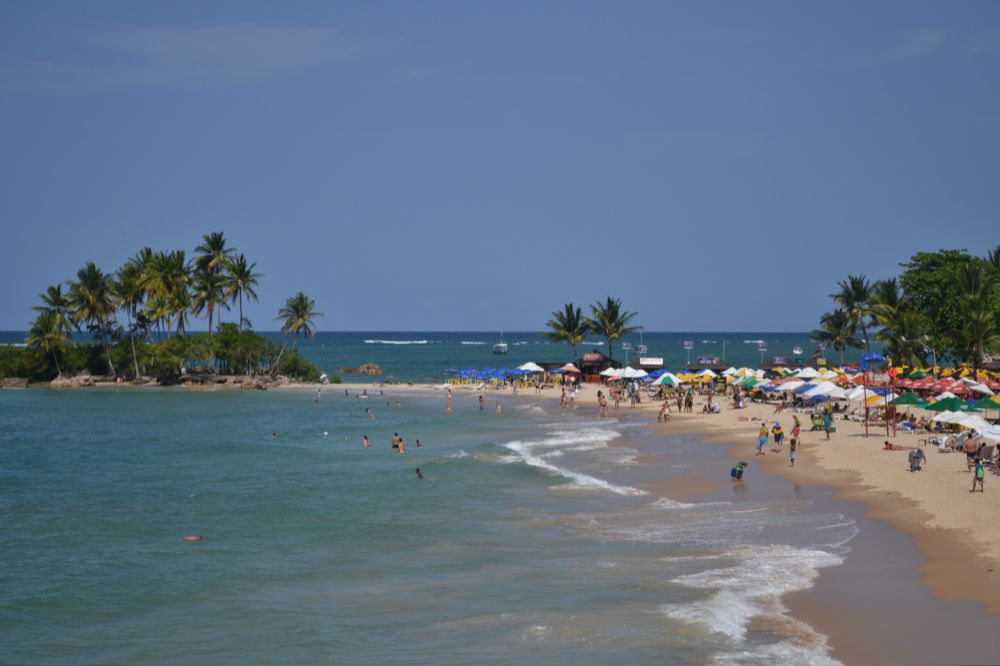
Despite this reality check, our holidays 2012 were a huge feast on Brazilian cliches: picture postcard sandy beaches, flawless sun, fruit-loaded breakfasts, fish-loaded dinners, omnipresence of music and dance, hectoliters of maracuja juice and caipirinha, 'acai, acaiiiii, acaiiiiiiiiii' crys on the beach, spontaneous capoeira shows and football matches against the backdrop of the sunset-lit sky, cheerful people exhibiting one of the world's biggest smiles and their relaxed pace, as if life was to be lived to the swaying bossanova rhythm.

With Tom's job in sight, the two weeks and half had a somewhat apocalyptic feel. It might well be the last 'real holidays' in quite some time to come. Carpe Diem and the sweet Dolce Vita thus followed us all way long. Off the beaten track and in low season it was easy to cut off. The programme was set a long time ago, Jericocoara being Tom's ultimate dream and Bahia mine. The mix couldn't be better, leading us from the Salvador's Afro-Brazilian urban beauty over Morro's postcard beaches and Chapada de Diamantina's endless trekking paths to Jericoacoara's kitesurfing paradise.

Voila a short photo summary: 

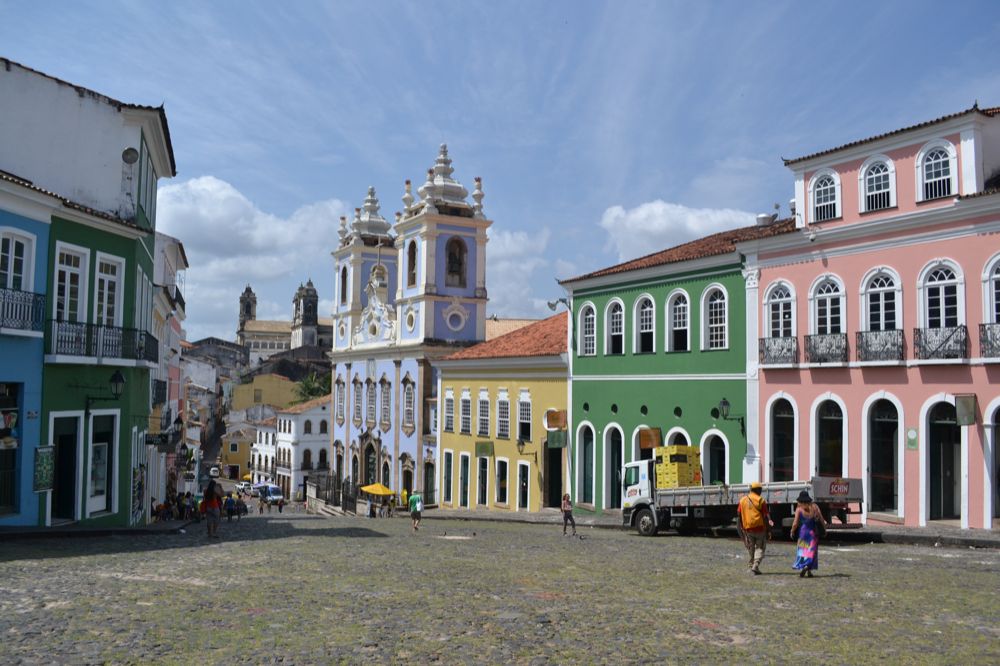
Salvador, thy name is Colour / Salvador de Bahia, quartier de Pelourinho
A two-storey city, an elevator bringing you up and down / L'ascenseur permettant d'acceder a la ville-basse et au port. Au loin la vieille prison flottante et les "tankers" qui croisent dans la baie
Instead of B&B we opted for airBnB, a good surprise
https://www.airbnb.com / Nous avons logés chez Neil, un anglais qui nous a loué une chambre sympathique dans le quartier de Barra. Son chien vous dit bonjour.
Havaianas apprenticeship / Dans un atelier de confection de tongs, ou j'ai trouvé mon bonheur
Morro de Sao Paolo, a postcard island / 2h de bateau direction l'ile de Morro, petit paradis verdoyant, locaux adorables, pêcheurs et couchers de soleil...dodo a la pousada Colibri, un MUST
 When the time slows down ... / A marée basse avec les pecheurs
Mr Coco, our best friend / Monsieur Noix de coco, rien de plus désaltérant quand il fait 35 degres. Egalement appréciable Monsieur Arrosoir qui vous rince les pieds régulièrement avec son ustensile, rafraîchissant!

Arriving at Lancois: at 30 years a night-bus ride feels different / Direction Lencois, 8h de bus de nuit, repos au petit matin dans un hamac accueillant en attendant que le village se réveille

My favorite fossil / Rochers surprenants
Sunset-inspired samba / Rio negro tout proche de Lencois, piscines naturelles et cours de samba
Chapada de Diamantina: where the world belongs only to you / Départ depuis Lencois pour  le trekk dans le grand parc naturel Chiapada Diamantina
Human waterfall / Cherchez mes jambes!
Hand in hand / Vale de Pati, trekk parmi ces immenses cheminées 
Jericoacoara, where even a toilet has a great view / Retour a Salvador, avion pour Fortaleza puis 4h de 4x4 dans les dunes pour finalement rejoindre le petit paradis de Jericoacoara
Getting ready / Jeri ou le spot de Kitesurf ideal, je me suis régalé, 30 noeuds tous les jours.
Ballet on the sea surface / Personne pour t'emmerder, la plage est sans fin
Buggy dreams / Le buggy est l'unique moyen de transport sur les plages et dunes avoisinantes
Taking a Venice-type ferry / Excursion a Tatajuba, et voici le Bac local pour traverser la lagune d'eau douce 
When all the worries vanish ... / oui c'est moi, les fesses dans l'eau et l'estomac satisfait d'huitres excellentes 
 Tatajuba's rainbow / Lagune d'eau douce a Tatajuba
Tarzan in a Wonderland / Un petit garçon, dans le plus simple appareil, dans une mangrove
Coco-flavoured meditation / degustation de coco pieds dans l'eau
Sunset, full moon and a mouth full of sand / La fameuse dune de Jericoacoara afin d'y admirer le coucher du soleil
Premature Carnaval in my samba teacher's kitchen / Cours de Samba chez Mel

Wednesday, May 2, 2012

From prisons to fashion shows


Lima, one week, lots of work, few photos.

I did exactly what they tell you not to do: stay in Lima for a week. »What?#?*&%? in Peru and you don't go to Machu Picchu?« kept saying the astonished faces. Turists' wisdom has it that Lima is ugly, grey and foggy – you land, get over your jetlag and hop in some of Latin America's best restaurants... and quickly move on.

Glued to Lima by work, I stayed. And absolutely loved it. I tried for a week to understand where Lima's proverbial ugliness came from – in vain. Instead, I stumbled across some of most breath-taking churches I've seen so far. Lovely »plazas« that litteraly call you to sit down and enjoy. Colourful colonial houses that feel like a relief compared to other skyscraper-loaded centers (bingo, the cutest one hosts the very Ministry of Foreign Affairs!). Bars that smell of past. Monasteries that feel as if in Spain. Sun 24/24, seaside walks, parks and the sea full of surfers.

Lima is all about the five senses. The smell of sea, humidity and fish that fills your nose as soon as the plane touches down. The taste of ceviche, tropical fruits and yellow potatoes. The sound of histerical horns (driving takes lots of courage) and nostalgic peña songs. The sight of gold, lots of gold – gold that even has its own museum. The touch of alpaca wool that abounds everywhere – on bodies, market shelves and catwalks. And obvisouly, the sensation of your head spinning after a glass (only one) of pisco. »Eso es un error,« was Luc's opening sentence at my very first Lima dinner while ordering piscos. A mistake that you repeat over and over again. It's addictive.

The sixth sense in Lima, however, tells you that it's a country full of contradictions. Which city isn't, anyway? It boosts Latin America's best macroeconomic numbers, yet 30% still live in poverty. It keeps restaurating amazing gold-loaded churches and temples, neighboured by modern villas (favelas). It's hungry of progress yet not ready to invest in technology (why? if manual workers cost only 1 USD). It wants to get rid of thousands of foreign drug-dealers/prisoners but lets kilos and kilos of drugs leak behind the walls. It's the world's biggest exporter of cocaine - and seems to like it. On the way to the prison, by the way, you pass one that hosts the brother of the current (very popular) president.

The time and the battery ran short to take a lot of pictures but there are some:


 Spread out, covered in its typical pre-winter fog... a view from the Malecon promenade.


Baranco, Lima's Montmartre, central park and library.


Mind the shiny front and the less shiny behind.


Puente de los suspiros (sighs / soupires / vzdihljajev), flooded with turists, just as in Venice.


Pachacamac ruins, next to modern favelas.


The ex-avenida panamericana, to the north.


The new shiny Slovenian room, just before its birth.
Tuesday, April 17, 2012

To the clouds and back

Day 8: Tren a las nubes

In colonial times, this was the way to travel from northwestern Argentina to Lima in Peru. 20 days, 800 km, packed trains.

Today Argentinian railways are almost extinct. To Lima you travel by bus or by plane. But for touristic purposes, the "Train to the clouds" remains Argentina's most famous train ride. It's a very long day, 7am-11 pm, rising from 1180m (Salta) to 4220m up in the mountains (beware altitude dizziness).


Train worming its way through the rugged landscape ...


Disturbing a lama party.


After the deterioration of the region's mining and its railway, the tiny vilages now depend totally on the Tren a las nubes for income.


La Polvorilla, a breath-taking engineering achievement at 4220 m. A 64 high and 224m long viaduct spanning a vast desert canyon. Its construction was a challenge more than a necessity. It feels like Disneyland in real nature.


A happy tourist (not even missing his SNCF).


A stop in San Antonio de los Cobres, Argentina's highest village (3775m). 

Monday, April 16, 2012

How many colours can a rock be made of?

Day 6 & 7: Maimara - Tilcara - Humahuaca - Salinas Grandes - Purmamarca

Tired of the hustle and bustle of the Salta city, we escaped to the wild again. This time to the Jujuy province - the one that links Argentina to Bolivia, where villages get scarcer and the mountains more colourful. Maimara, where we stayed for two nights in the cosy nest of Juan's family, is surrounded by the so called "Painter's Palette" (photo below) and Purmamarca by the "Hill of Seven Colours". The North of Argentina is to be discovered off the beaten track, possibly during low season and in good weather that brings out its most vivid colours.


The expat wisdom has it that in Argentina, 2 people out of 3 are bastards but that the remaining 30% are so cool that they completely neutralize the bad impression. So right! A good rest and la dolce vita in Juan's garden who opened up his doors as if we were his kids.


A trip to the "devil's throat". Remark: every second rock formation in Argentina bears this name.


Tilcara, peacefully nestled among ocre hills.


Avenida Corrientes in Humahuaca. In love with Cristina, obviously.


An evening stroll in Tilcara.


Sky, snow, salt.


"Hill of Seven Colours". I bet there are more!

Sunday, April 15, 2012

Cowboy fever

Day 4 & 5: Molinos - Cachi - Salta

Horse-riding at 7 am. The Molinos village is still asleep. No light, no noise, no people. Just the horses and us. And the whole battalion of village dogs following us. A thrilling idea for somebody who fell off the horse in China 3 years ago and still hasn't got over it. But the moment was right, the horses trust-inspiring and the company encouraging. A two-hour wakening-up exercise. Before-sunrise peace and calm. Morning colours and awe-inspiring nature that makes you feel very small and big at the same time. 


Fear has big eyes. Literally :)


Vienna-school horse riders


Molinos wakening up at first morning sunrays


The end of the Ruta 40 trip: Cachi, 150 km north of Cafayate. 


Local police, very busy :)


Parque Nacional Los Cardones (= National Cactus Parc). A seemingly endless route, snow-covered tops and an invasion of cactuses.


The only road danger - lama.


"Salta la linda". PR slogan that goes more for the province than for the city as such. It's worth a stop in the pink cathedral, though (awesome inside & outside!), MAAM museum (High Mountain Archeology Museum) and the evening fun in the "penas" (traditional restaurants with folk music and danse; touristy but fun).